Complete Guide to 2026 Roth IRA Contribution Limits
Everything you need to know about 2026 Roth IRA limits: $7,500 maximum contributions, $1,100 catch-up for age 50+, and new MAGI phase-out ranges.
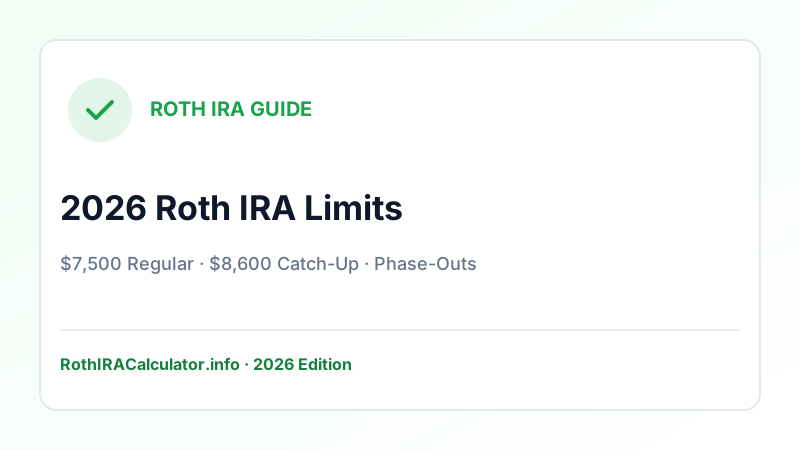
2026 Contribution Caps at a Glance
The Internal Revenue Service (IRS) released updated inflation-adjusted thresholds for retirement accounts. For the tax year 2026:
- Under age 50: You can contribute up to $7,500 across all your traditional and Roth IRAs.
- Age 50 and older: You qualify for a $1,100 catch-up contribution, bringing your annual limit to $8,600.
These limits represent a crucial opportunity for retirement savers to allocate more after-tax capital into accounts that generate completely tax-free compound growth.
Income (MAGI) Eligibility Thresholds for 2026
To contribute directly to a Roth IRA, your Modified Adjusted Gross Income (MAGI) must fall below specific phase-out thresholds:
| Tax Filing Status | Full Contribution Allowed | Phase-Out Range | Ineligible for Direct Contributions |
|---|---|---|---|
| Single / Head of Household | MAGI under $153,000 | $153,000 – $168,000 | $168,000 or greater |
| Married Filing Jointly | MAGI under $242,000 | $242,000 – $252,000 | $252,000 or greater |
| Married Filing Separately | — | $0 – $10,000 | $10,000 or greater |
Pro Tip: If your earned income is less than the annual limit, your total IRA contribution cannot exceed your actual taxable compensation for the year.
Deadline for 2026 Contributions
You have until your federal tax filing deadline (typically April 15, 2027) to make contributions designated for the 2026 tax year. Giving your money an extra year to compound early in January, however, consistently beats waiting until the April deadline.
Estimate Your Own Tax-Free Roth IRA Growth
Use our 2026 interactive calculator to test different contribution amounts and compound growth rates.
Open Roth IRA Calculator